


Introduction
When you are active in coaching, sooner or later it happens that you meet a client who cannot make proper associations. In other words, people have problems going into feeling. However, since you can only change feelings with feelings in change work, some coaching ends at this point.
I would like to show here a possibility of using the Mental Space Psychology can improve the situation.
Sergei can't do it
Some time ago I had a client named Sergei. A coaching colleague had failed with his work because Sergei could not properly associate himself into situations and produce feelings accordingly. Sergei then contacted me and asked me to help him in his problem situation.
I accepted the mandate, we met and began to work together on his problems.
It quickly turned out that Sergei had to fight resistance when trying to put himself in the shoes of his wife or daughter. He didn't really succeed. Now you could say: Well, Sergei is just a cerebral analyst. There's nothing you can do about it.
But why shouldn't "not associate" be defined as behavior? And we have learned how to deal with behaviour – haven't we? Okay, you should choose the methods carefully.
Back to Sergei.
I interrupted the work on the family and went with Sergei to another part of the room. I had worked with Sergei before, so I knew something about his history. That made the transition easier for me.
Investigation
So I said to Sergei: "Dear Sergei! I know from your past, how you were in the Russian military at the time, and when you were stationed abroad, you ran off to the West. From then on, death lurked at your bedside every night for a long time. You were afraid that they would come for you. Correct? These are a lot of bad feelings, and it's understandable if you've learned to avoid these bad feelings. Many years have passed since that time, this threat no longer exists. However, your strategy for avoiding feelings still exists.
Could that be the case?"
Sergei answered in the affirmative. I said: "Let's take a closer look."
"Now close your eyes and tell me... If all that prevents you from going into a feeling were a drink, what drink would it be?"
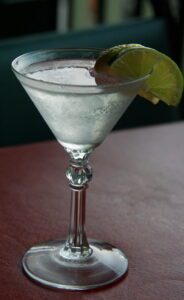
Sergei chose a spicy vodka. I asked him to keep his eyes closed and said: "If this spicy vodka were in the room, where would this vodka be 'right'? Would rather be in front of you ... or rather behind you ... Would he be more right-wing or more left-wing?"
The vodka appeared right in front of Sergei's eyes, about half a meter away. "If the vodka had eyes, in which direction does it look – and what feeling do you have when you perceive it that way?" The vodka stared straight into his eyes and it made Sergei feel bad in his stomach. Massive and pulsating!
Now I had a materialization that was mentally connected to "not being able to associate" and with which I could work wonderfully.
Next, I needed a reference materialization. I said to Sergei: "Is there a person or an activity that you don't care about at all?" He had to understand that first, pondered and then said: "Cut toenails!" I took note of this answer with amused amazement. Now I asked, which symbol or object represents "cutting toenails"?
He answered: "A dung heap".
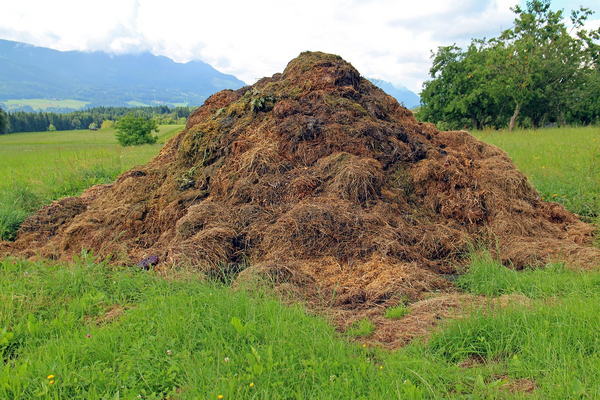
When I asked where in the room the dung heap was, it materialized to the left behind him, about 5 meters away.
Intervention
After Lucas Derks such materializations (he calls these personifications) can be changed in two ways:
- I change the location and/or the quality of the representation. In other words, I'm changing the submodalities
- I put feelings in the form of resources into the materialization
In this case, I decided on the first option, because he had a problem with "going into feeling".
"Sergei, can you move the vodka in front of you towards the dung heap and bring it close to it?"
He narrowed his eyes a little, visibly concentrated and his head moved slightly to the left during his effort. Finally he nodded.
"Did that work?"
"Yes!"
"What has changed? How does the vodka feel to you now?"
"The vodka doesn't bother me so much anymore. I feel lighter and more liberated. Not so constricted at the chest anymore!"
"And is that good for you?"
"Yes! Absolutely!"
I now asked him to repeat the waving of the vodka from front to back left five times. He should then check whether there are any remnants of this drink or container in front of him. He said that there was still such a diffuse shadow. Then I instructed him to clean away these remains with an imaginary cloth until everything was gone. Sergei made appropriate movements and then nodded visibly satisfied.
When I asked him where the vodka was now, he replied with a grin: "I dumped it in the dung heap!"
Sergei had not only brought the "not being able to associate" to a place in his social panorama that exudes less influence on his well-being, but with the descent into the depths it is highly likely to reduce the influence on himself.
Test
I now checked the ecology and sustainability of the result by having Sergei first associate it with the vodka and then with himself, feeling whether the current state is okay for both of them.
That was no problem for him and he confirmed that Vodka and Sergei now felt comfortable. Sergei didn't even notice that he took the place of the vodka without hesitation and associated it with it. I now checked the observer position and finally the view of the entire system including the important people associated with it. These two perceptual positions were also okay for Sergei!
Accordingly, according to the AQAL Model by Ken Wilber (All Quadrants All Levels).
I thanked Sergei for his cooperation and trust in me. We took a short break and returned to the original coaching task, i.e. the work with the family members. The association now worked and we were able to solve his problem!
Methods used:
- Since Sergei could not make associations properly, I refrained from methods that made him believe that he had to "get into" a person. Hence the consideration of vodka and dung heap from the outside, using the functionality of the social panoramas after Lucas Derks.
- Moving the personified vodka towards the dung heap can also be done from the observer's position and still change the feeling associated with the vodka. The use of the peculiarities of the social panoramas is "normal" for the client and does not generate resistance.
- Associating it in the vodka, after assuming the quality of the dung heap, is already a test to check the change
- Ecology and sustainability assessment according to the AQAL Model Ken Wilbers by taking all perspectives and reviewing them. From all points of view, the result must be ok and without a bad feeling.
Format MDE (I don't care)
Procedure according to Rainer Wawrzik / Lucas Derks
- Think of something, a person or an activity that you don't care about at all.
- If there were a symbol that represented this, what would it be?
- Where in the room is the symbol?
- Examine the place/representation of the "MDE"
- Things that burden can then be brought to this place and into the quality of the "MDE" and, for example, positioned right next to it. This provides relief.
- Eco-Check
